
September 3, 2025
The Beauty of Useful Things: Decorating a Kitchen That Works
Share
The Heart of the Home, Not a Showroom
Every kitchen tells a story. Some tell it with the aroma of stock simmering on the stove, others with gleaming countertops where not a spoon dares to linger. Too often, though, kitchens become stage sets—beautiful but sterile, more photo shoot than gathering place.
The truth is simpler: the most inviting kitchens are the ones where the things on display are the things actually in use. A kitchen should feel alive. It’s a philosophy that sounds obvious, but once you embrace it, it reshapes the way you think about the space where you chop, stir, and pour your morning coffee.
Why Practical Beauty Works
For years, design trends have encouraged perfection—minimalist shelves lined with identical bowls, walls hung with copper pans that never touch the flame. The trouble is, these kitchens may look flawless in photos, but they don’t breathe.
There’s a deeper warmth in shelves that hold the platters you serve from, bowls that bear the faint scratch of daily use, and cookbooks stained with olive oil fingerprints. Function isn’t the enemy of beauty—it’s the foundation of it.
Historically, this isn’t a new idea. In 18th-century English country houses, the kitchen wasn’t just a utilitarian back room. It was layered with copper pots, worn oak tables, and crockery that had been in service for generations. The beauty came from its lived-in nature. The French still get this right: a rustic Provençal kitchen feels inviting not because it’s flawless, but because it’s full of character and things that are meant to be touched.
Mixing Old and New
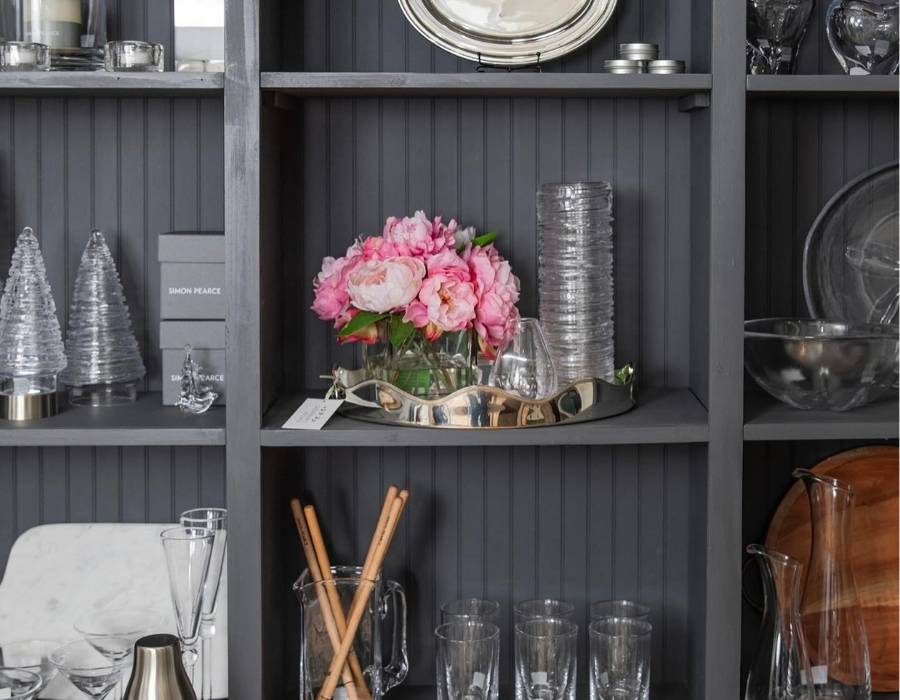
A kitchen that inspires you doesn’t come from one shopping trip. It’s a layering process. Pair an antique silver tray inherited from your grandmother with the sturdy new china you bought last year. Put handmade pottery next to pressed glass tumblers. Add a serving piece you picked up at a local shop. When old and new share the same shelf, the whole room gains texture.
Antiques in a kitchen aren’t about nostalgia for its own sake. They’re about contrast. A century-old platter leaning against a backsplash makes even a row of simple white bowls feel curated. And when that platter comes down for a holiday roast or Sunday supper, it continues earning its place.
At Cassandra’s Kitchen, we’ve always loved this balance—handcrafted platters alongside everyday mixing bowls, trays that move from display shelf to dining table without missing a beat.
The Power of Restraint
Of course, a kitchen can tip into chaos as easily as sterility. One of the best approaches is to choose a restrained palette. White china with silver accents. Earthenware in shades of cream and brown. A consistent base gives you freedom to play with shape and proportion.
Mix round bowls with flat plates, tall pitchers with squat serving dishes. The eye appreciates variation, but the discipline of color keeps everything harmonious. Think of it the way a composer uses different instruments in the same key.
If you love collecting, this restraint keeps it from turning cluttered. A few timeless serving bowls, a neutral platter, and a stack of everyday plates can become the anchor of your display.
Height, Light, and the Unexpected
Shelves need rhythm. A row of identical dishes quickly feels static. Tilt a platter against the back wall to create height. Stack plates at one end, bowls at another, with a curve of glassware breaking up the line.
And then, add something unexpected. A small lamp tucked into a corner shelf warms the space instantly. A row of cookbooks brings life and color, while making it clear this is a kitchen that’s used, not staged.
The same cookbook you reach for to make pasta on a Wednesday night can also be part of the display. A well-worn spine is more beautiful than any purely decorative object. We see this every day in Bluffton—kitchens that come alive when the cookbooks, trays, and tools on display are the ones people actually reach for.
Rituals of Display
There’s a quiet pleasure in curating shelves at the end of the day, shifting a bowl here, a platter there. It’s not unlike tending a garden. The arrangement evolves, reflects the season, your mood, even the meal you’re about to serve.
In the Lowcountry, where salt air lingers and kitchens often open onto porches, that sense of seasonal rhythm is especially strong. A summer kitchen might show off bright white pitchers and woven baskets, while winter calls for pewter, wood, and heavy ceramic bowls. The ritual of moving things around becomes part of the life of the house.
More Than Decoration
The best test of whether a kitchen is well decorated is this: do you want to cook in it? A beautiful shelf is wasted if it intimidates you into leaving things untouched. The whole point of displaying what you love is to invite yourself—and others—to use it.
That means the platters come down, the cookbooks come off the shelf, the bowls are filled, washed, and filled again. The space isn’t frozen in place—it’s ready for life to happen.
Bringing It Home
If you want your own kitchen to inspire rather than intimidate, start small. Pick three things you already use often and give them pride of place: a platter, a stack of everyday bowls, a beloved cookbook. Then build outward. Layer in one antique piece, one new piece, one decorative but useful oddity—a lamp, a vase, a basket.
Keep editing until the shelves tell your story. And when they do, you’ll find yourself walking into your kitchen each morning with a sense of gratitude: this isn’t just where you cook—it’s where life unfolds.
And if you’re looking for the right pieces to begin, start with the useful ones: a handcrafted serving platter, a set of mixing bowls you’ll reach for daily, or a favorite cookbook that’s as beautiful on the shelf as it is practical on the counter. Beauty follows function—and in the kitchen, that’s where it all begins.

