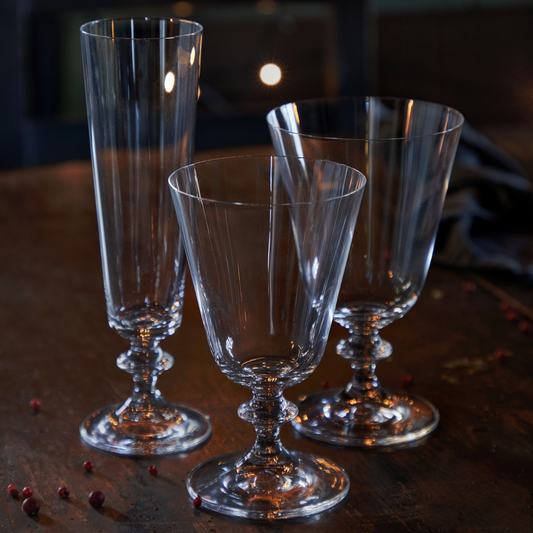
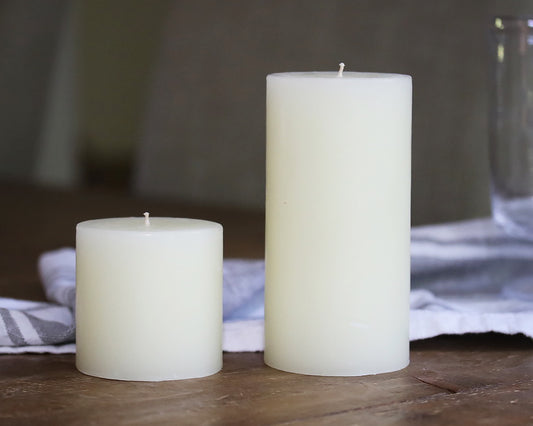
Collection: Glassware for the Table, the Bar, and the Shelf


Glassware is the part of a table that catches the light. It also tends to be the part that reveals the most about how a host thinks: whether the glasses were chosen with care or pulled from a default set, whether the vase was placed or just happened to land there.

At Cassandra's Kitchen, this collection brings together two distinct traditions in the same category. Simon Pearce handblown glass, made in Vermont since 1981, brings weight, warmth, and a barely perceptible irregularity that no machine can replicate. La Rochère, the oldest glassware manufacturer in France, presses its Bee collection into molds that have been used for generations: each glass carries a honeybee relief that catches light differently at every angle.

Costa Nova adds a spare, French-bistro sensibility. VIETRI Hibiscus Glass bud vases introduce color in a form that holds a single stem as naturally as a full arrangement. Juliska and Farmhouse Pottery fill out the everyday tier.

Browse the collection below and use the guide underneath to find the right piece for any setting.

Two Traditions, One Collection

Simon Pearce: Handblown Glassware Built to Last

Simon Pearce founded his glassblowing studio in Vermont in 1981, drawing on Irish craft traditions he had trained in as a young man. Every piece of Simon Pearce glass is still blown by hand, which means each one carries the slight variation of a made object rather than the uniform sameness of a manufactured one.

The weight sits differently in the hand. The rim is slightly thicker. The way light moves through the glass has a depth that pressed or machine-blown pieces cannot match.

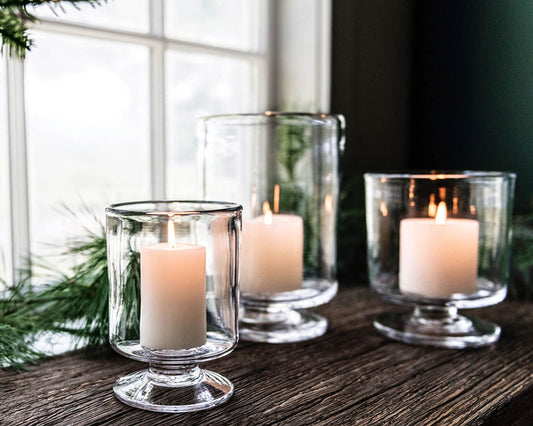
In this collection, the Simon Pearce range covers a wide sweep of occasions.The Simon Pearce Nantucket Hurricane, available in two heights, is one of the most enduring table accents we carry: a wide-mouthed cylinder that holds a pillar candle or a collection of tapers and casts warm, even light across the table.

For a broader selection of Simon Pearce serving and entertaining pieces, see the serveware collection.

La Rochère, Costa Nova, and French-Inspired Drinkware for Every Day

La Rochère has been making glass in the Lorraine region of France since 1475, making it the oldest still-operating glasshouse in the country.

The Bee collection, its most recognizable range, is pressed rather than blown: a centuries-old technique that produces the sharp honeybee relief on each glass and the slightly irregular thickness that gives French glassware its characteristic feel.

The Juliska Provence Large Tumbler brings a deeper color note to the table: handcrafted European glass in tones that flatter food and wine equally.

For a complete overview of drinking glasses across styles and budgets, the drinkware collection covers the full range.

How to Build a Glassware Collection

Decorative Glassware and the Bar

The glassware that lives on a bar cart or a sideboard works differently from the glass at the table. It needs to hold up as an object when nothing is poured into it.

The Montpelier Bar Pitcher is a bar pieces that read as considered rather than assembled: the Montpelier form has the clean proportions of a glass that was designed rather than defaulted to.

The Echo Lake Cocktail Carafe is a one-piece pouring vessel with a restrained silhouette that works for water, spirits, and infused drinks equally.

VIETRI Hibiscus Glass bud vases, available in dark green, cobalt, red, clear, white, pink, and two fluted forms, serve the shelf and the surface as well as they serve the table: the molded hibiscus pattern catches ambient light and the saturated colors read as intentional decor rather than incidental ornament.

All of the above pair naturally with other pieces in the gifts for the entertainer collection.

Choosing the Right Everyday Drinking Glasses

For the glass that is on the table every night, the decision comes down to two things: how it feels in the hand and how it holds up over time.

The Simple Glassware Set and Farmhouse Glassware Set  are both handmade in Vermont, finished in the brand's signature organic milk glaze on the lower portion, and built from the same custom clay-and-glass formula the Zilians developed for daily use. They are the everyday glass that improves with familiarity rather than wearing out.

The La Rochère Bee Water Glass is the better choice for a host who wants a glass that reads as collected rather than purchased in a set: each piece is slightly different, and the honeybee detail gives it a point of interest that a plain glass does not have.

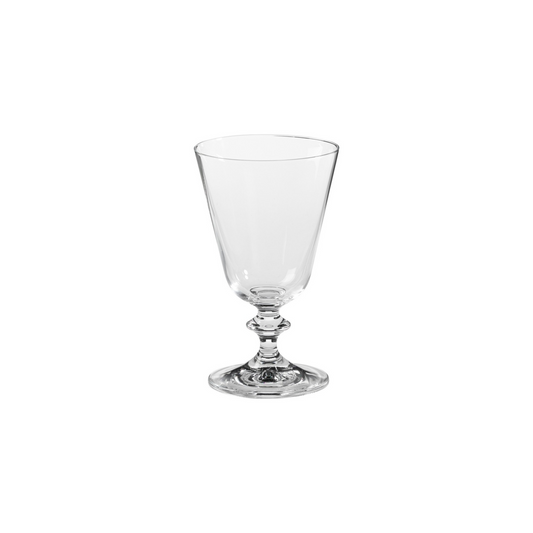
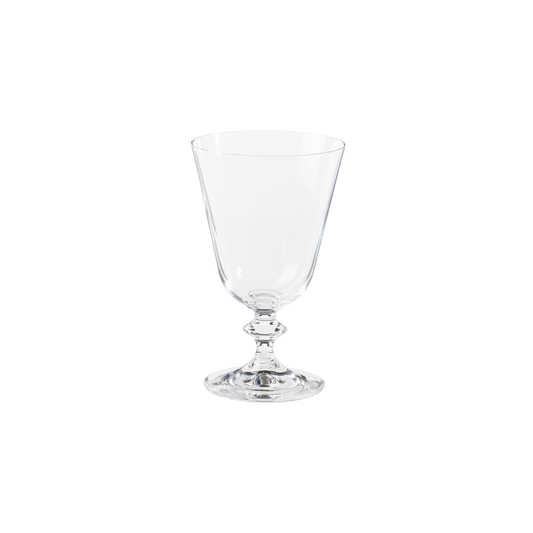
The Costa Nova French Water Glass is the most straightforwardly practical option in the collection: clean lines, good weight, dishwasher safe, and available individually so replacing a broken glass is never a complicated order.

For Farmhouse Pottery pieces beyond this collection, browse the Farmhouse Pottery collection for the full range of handmade glass and stoneware drinkware.

Frequently Asked Questions about our Glassware Collection

How should I care for my water glasses?

Most French-inspired drinking glasses are dishwasher safe, but hand washing is recommended for artisanal or handmade pieces to preserve clarity. Always check the care instructions for specific items in the collection.

What is the difference between the VIETRI Hibiscus Glass bud vases and fluted vases?

The VIETRI Hibiscus Glass bud vases are smaller, single-stem vessels suited to a dinner table, side table, or mantelpiece arrangement. They are available in several colors including cobalt, dark green, red, clear, white, and pink.

The fluted versions are taller statement pieces with a ribbed, column-like form that works well as a standalone shelf or console accent. Both are molded glass designs from VIETRI, but the fluted shapes read more architectural while the bud vases feel more intimate and versatile.

What glassware works best for entertaining?

For entertaining, the most versatile pieces combine good table presence with practical serving capacity. A substantial water pitcher, durable wine glasses, and a few well-proportioned cocktail glasses will cover most gatherings. Decorative pieces like hurricanes or tealights add warmth to the table, while a carafe or bar pitcher allows hosts to serve drinks without leaving the table repeatedly. Together these pieces create a setup that feels intentional without being overly formal.

Can I mix Simon Pearce glasses with La Rochère or other styles?

Mixing glassware styles is one of the most effective ways to set a table that feels curated rather than matching-set. Handblown tumblers paired with French pressed wine glasses, for example, share a handcrafted quality that ties them together even though they come from different traditions. The key is consistency of tone: pieces that lean toward artisan materials and natural textures tend to sit comfortably side by side.

How do I care for Simon Pearce glass?

Most handblown glassware benefits from gentle care. Hand washing with warm soapy water and drying immediately with a soft cloth helps prevent spotting and mineral buildup. Dishwashers, even on delicate cycles, can introduce thermal stress over time. Avoid stacking glasses inside one another and store them upright on a padded shelf to reduce pressure on the rims.

What is handblown glassware and is it better than regular glass?

Handblown glassware is made by a glassblower shaping molten glass on the end of a metal pipe rather than pressing or casting it in a mold. The result is a glass with slight natural variation in thickness and form, which gives it a weight and warmth that machine-made glass rarely matches. Much of the glassware in this collection follows that traditional process. It is not inherently more fragile than pressed glass, and many customers find it holds up well with careful everyday use and hand washing.